Who Brings the Cleaning Supplies for a Downtown Toronto Condo Visit?
Only have 30 seconds?
- Ask explicitly who brings the vacuum, floor tool, cloths and cleaning products.
- Send the manufacturer’s care instructions for any surface you want treated in a specific way.
- Confirm the entrance, parking or unloading instructions, and the accessible route to the unit.
- Start with the Homeharbor home services guide to see how condo cleaning fits with the other work you are arranging.
Check which supplies are covered in the price
The words “supplies included” can describe several arrangements. A team might arrive with products and equipment for the entire visit, bring products and use a vacuum you provide, or work with tools and products left in the unit. The arrangement can also differ for a recurring appointment and a first visit. Ask what the quote actually covers, using the rooms and surfaces in your condo as the reference. Your list will be more useful than a single answer about whether the company brings supplies.
For a one-bedroom unit, write separate lines for carpet or rugs, hard floors, the bathroom, and the kitchen. Add any task that needs a particular tool, such as lifting debris along a rug edge or cleaning an appliance exterior without marking the finish. For each line, ask what the team will bring and what it expects to find. If the quote includes an equipment or product fee, ask whether it is a one-time charge or part of every visit. A product fee that seems small on the first invoice can matter when you compare the cost of several months of cleaning.
Use the same tasks when you compare two quotes. One provider may include a vacuum and floor tool in the quoted price. Another may expect you to supply both and offer an equipment option for an additional charge. Put the price of the actual visit beside the tasks, the equipment responsibilities and any separately quoted building charges. The downtown condo cleaning guide can help you turn a room list into a clear scope before you start asking about individual supplies.
Give your floors their own line
A vacuum can be a good match for one part of the unit and an awkward fit for another. If you want area rugs and hard floors cleaned, tell the cleaner what each surface is made of if you know. Mention any manufacturer restrictions and whether a rug edge or transition strip is loose. Ask the cleaner which attachment or method they intend to use on each. If the answer depends on seeing the floor, agree that the cleaner can assess it when they arrive and leave it alone until you have discussed any uncertainties.
When you provide the vacuum, make sure it is available and ready to use. Show where the attachments are, leave enough charge for the appointment if it is cordless, and tell the cleaner about any part that is damaged or difficult to operate. Ask what will happen if the vacuum fails during the visit. A reasonable fallback may be to complete the rest of the agreed work and leave the rug for another appointment. Agree on who will contact whom and how the missed item will be recorded.
You may have a preferred floor product even if the team brings all the tools. Leave it in its original labelled container with the instructions that apply to the surface. If you have the flooring care sheet, send the relevant part before booking so the cleaner can check whether the request fits the job. For a new finish or a surface you cannot identify, agree on the work that can go ahead around it. The cleaner can still address other rooms while you check the finish or ask the building or installer for the right care information.
Call out the few product preferences that change the work
A request such as “use the stainless steel product in the lower cabinet on the fridge exterior only” is easier to follow than “use my products.” Identify the surface, the product and the reason for the preference, such as maintaining a specific finish or avoiding a fragrance you dislike. Ask the company to explain what it can accommodate. If fragrance is a concern, discuss products brought into the unit and products that may already be on the team's cloths or equipment. Ask for the details you need to decide whether the proposed arrangement works for you.
Choose a separate spot for the supplies you are providing. Leave containers closed and labelled, and point out anything you prefer the cleaner to leave in place. If you are away, send a short message describing where the supplies will be and who can answer a question. A photo of the storage shelf can be useful if the cabinet has several similar containers. Keep the manufacturer’s directions with any specialty product and make clear that the request applies only to the named surface. In a unit with two bathrooms and several similar vanities, specify which one you mean.
An especially useful instruction is what to do when something is missing. You might ask the cleaner to complete the kitchen counters and sink, leave the disputed floor area alone, then send a note that the approved product ran out. Decide in advance whether you want to approve alternatives by message. If the visit happens during a workday and you may be unavailable, give the cleaner clear permission to continue with other listed jobs while the question waits. That small decision can keep an equipment issue from interrupting the rest of the visit.
Plan equipment access around Front and Jarvis
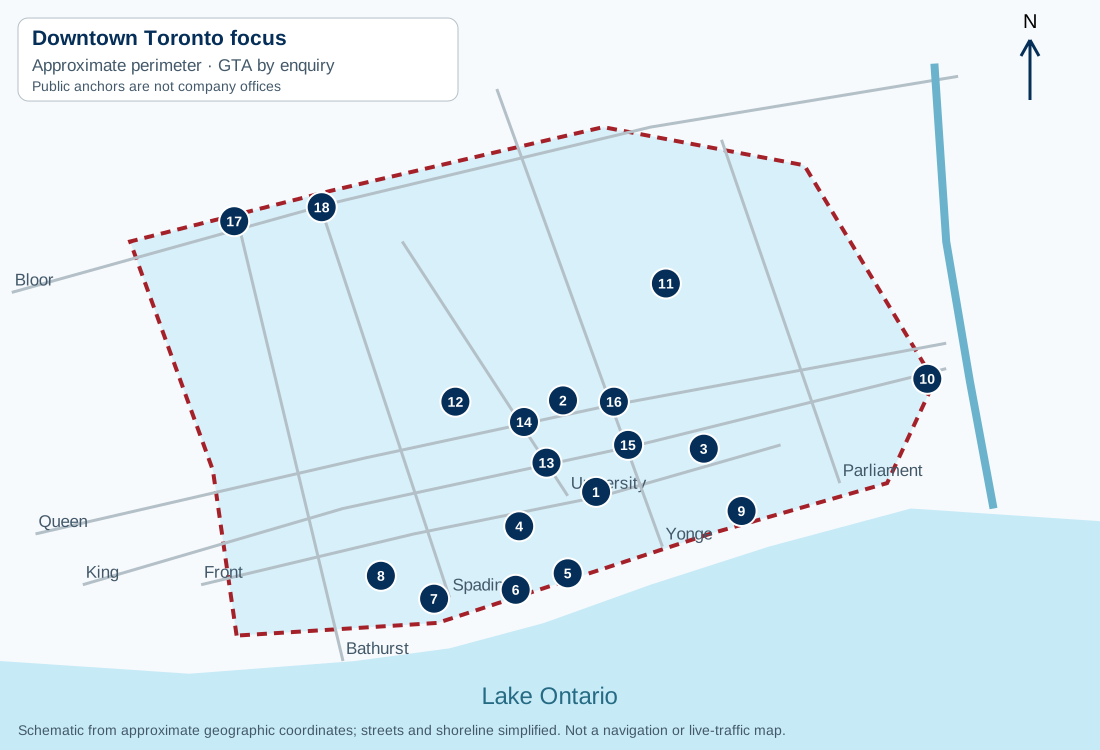
The map above uses St. Lawrence Market at Front Street East and Jarvis Street as a reference point. A nearby mailing address may point to the residential lobby while the service entrance sits around the corner or on another street. Give the team the exact address of the entrance it should use, plus the name of the entrance if the building has several towers. The St. Lawrence Market area guide can help orient someone who knows the intersection but has never visited your building.
- Transit and arrival. If a cleaner is arriving by TTC, send the lobby entrance and cross street. Ask whether the team can comfortably bring the equipment it agreed to supply from that entrance to your unit.
- Parking and unloading. If the team drives, check visitor parking, the service entrance and any height limit with building staff. Ask whether an unloading stop requires registration and whether it is separate from parking during the visit.
- Accessibility and elevators. Confirm the step-free route when it matters, the elevator the team can use, and any doors that require a resident or concierge to open them. Give the cleaner a contact for access questions.
A suitcase-sized kit and a full equipment cart can change which entrance is practical. Tell the provider about a short set of stairs or a long route from the garage before the visit. If the regular elevator is suitable for a small kit but the building asks vendors with carts to use a service elevator, share that instruction and check whether it needs to be reserved. The party that knows the building is usually in the best position to confirm the current instruction. The team can then tell you if its equipment or arrival plan needs to change.
Decide which supplies can stay between visits
When the same company comes regularly, keeping a few tools in the unit may simplify arrival. Ask which items the team is willing to use repeatedly, how it will identify your labelled products, and whether it can tell you when supplies are running low. A short shared list can record the floor product, the cloths or mop pads allocated to the job, and the vacuum attachment for each room. Agree on who keeps those tools ready. For example, a resident may recharge the vacuum, while the cleaner reports a worn attachment before the next booking.
Storage matters in a small condo. Set aside one shelf or bin and agree where equipment goes after the job. If you want cloths separated by use or moved to a laundry basket, specify where each set belongs and who will wash it. A clearer arrangement helps when a regular cleaner is away and someone else takes the booking. You can send the same one-page note and update any instructions that have changed. Ask whether the company can keep those preferences with the booking so you have a chance to review them before a substitute arrives.
A recurring contract is a good time to settle disposal details too. Ask where the cleaner should put used disposable supplies and whether taking rubbish to the building's disposal area is included. If waste handling differs by floor or requires a key, explain the building arrangement. You can still keep the supply list short. It only needs to cover the tasks, tools, products and access instructions that change what happens on the day.
Check the result before repeating the same arrangement
At the end of the first visit, review a few places you had discussed specifically. A light check of the rug edges, the floor finish in the entry and the appliance front can tell you whether the agreed method addressed your priorities. If the team skipped a surface because it could not confirm a product or gain access to a tool, find out exactly what was missing. Update the next booking with the tool or product that will be available. For a concern about a finish, describe what you are seeing and share a photo if that helps the company discuss the next step.
A clearer second visit is often the product of one small correction. A team may have brought the right floor tool but found that elevator access took longer than expected. A resident may have provided the right vacuum but forgotten to leave the attachment for the rug. Record the practical fix beside the original quote, then send only the revised arrangement when you rebook. This gives the next cleaner a clear account of what to bring and where to start.
A message you can send when you request a quote
“I’m booking a condo cleaning near Front and Jarvis. Please tell me if your quote includes a vacuum, hard-floor tools, cloths and cleaning products. I can leave the floor product recommended for the living room surface in the kitchen cabinet. Please confirm whether your team can use it and what you would do if it is unavailable. I will confirm which entrance you should use and whether unloading or elevator access needs to be arranged. Please also identify any separately charged supplies or equipment.”
Adapt the message to the unit and the rooms you want cleaned. If your main concern is a rug, put the rug and its tool requirements first. If you will be out when the team arrives, add the access instructions and the person who can answer a question about the unit. Keep a copy of the confirmed list with the quote so you can use it to check the first visit and make any changes before you set up a repeat booking.